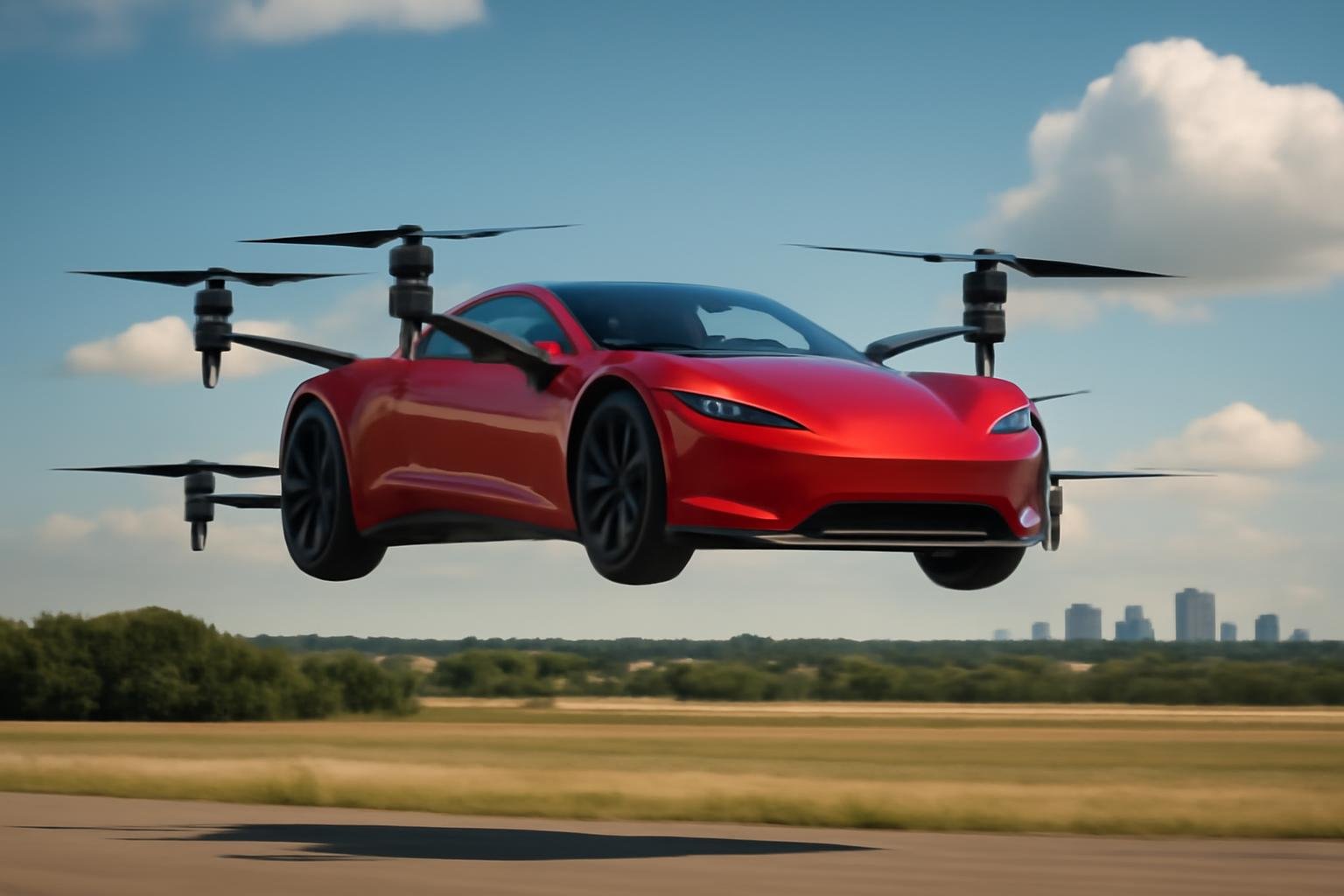
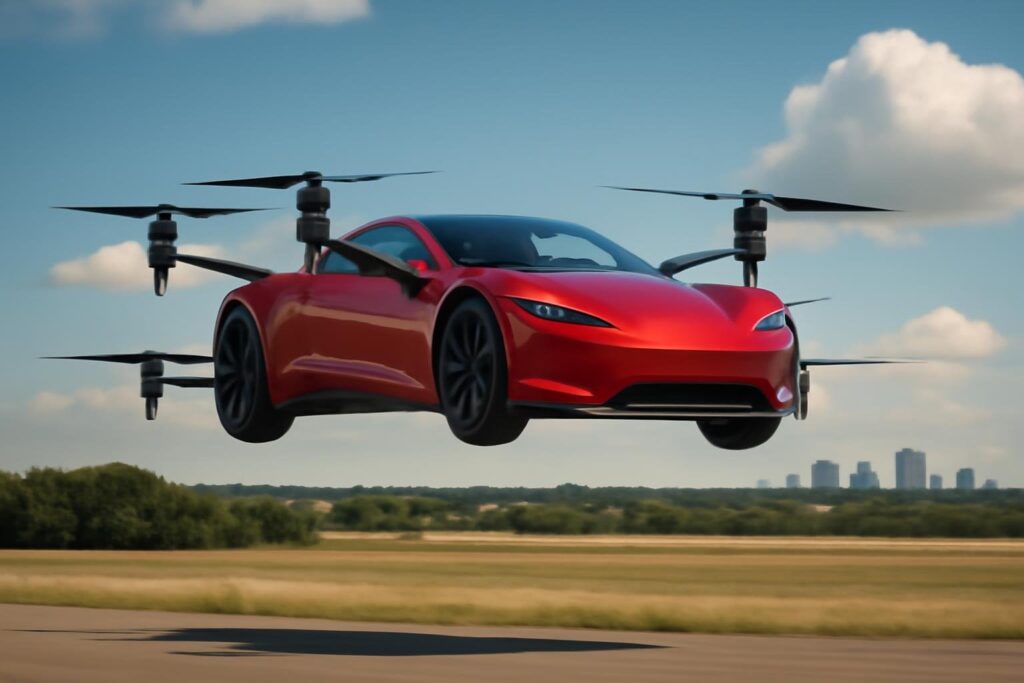
On October 15, 2026, Tesla revealed its long-awaited flying Roadster during an event at SpaceX’s test facility in McGregor, Texas. This groundbreaking vehicle, which can accelerate from 0 to 60 miles per hour in under a second, showcases the merger of automotive and aerospace technologies, thrilling audiences with its gravity-defying capabilities.
A Stunning Demonstration
The new Roadster drew attention with its dramatic flying demonstration, where it drove upside down along a ramp before using thrusters to momentarily soar into the air and perform midair maneuvers. CEO Elon Musk, in a nod to a future filled with flying vehicles, expressed, “Turns out the future does have flying cars,” highlighting the potential of Tesla’s innovative engineering.
The Evolution of the Roadster
The second-generation Roadster represents a significant shift from the original model released in 2008, which was discontinued in 2012. Initially unveiled in 2017, this revamped version has seen its production timeline pushed back to 2028, significantly later than previously anticipated. Since announcing the Roadster, Tesla has faced criticism for its delays, with some customers expressing frustration over the lengthy wait to bring the car to market.
Different Variants and Pricing
Several variants of the Roadster have been announced, including the Performance version, which prioritizes on-road use, the Thrust version with added acceleration thrusters, and the exclusive Rocket variant, which can briefly leave the ground. Reservations for the Performance model require a $50,000 deposit, while the Thrust version costs $250,000. The Rocket model, capable of limited flight, is available only to select customers, emphasizing its niche nature.
Regulatory Challenges and Market Impact
Despite the awe-inspiring presentation, it remains unclear how the flying features will be regulated. The Federal Aviation Administration does not classify the Roadster as an aircraft, indicating that it won’t need airworthiness certification. The National Highway Traffic Safety Administration, which oversees vehicle safety, has stated that it will monitor developments but relies on manufacturers for compliance. Analysts remain skeptical, suggesting that the Roadster, while a technological marvel, will not significantly boost Tesla’s revenue as it does not cater to mass-market consumers.
What Lies Ahead for Tesla
The Roadster serves as a showcase of Tesla’s ambition to blend automotive performance with cutting-edge technology, acting more as a “halo car” than a mainstream product. While it signifies a departure from conventional vehicle design and functionality, it also raises questions about the future of driving cars amidst Tesla’s shift toward autonomous vehicles. As Tesla navigates these transitions, the Roadster could remind enthusiasts of the thrill of driving while representing the company’s ongoing evolution in the tech-driven automotive landscape.